Thursday, 3 October 2013

Andrew Goodwin 'Dancing in the Distraction Factory'

Andrew Goodwin’s theory

According to Andrew goodwins theory the traditional narrative analyses don’t really apply to pop videos, reasons for this is because they approach narrative from a different angle to novels and films.
The reasons for the different narrative from a different narrative structures are as follows:
1.      Pop videos are built around songs
2.      The pop video uses the singer both as narrator and as a character
3.      The singer often looks directly at the camera (trying to involve the viewer at home with the performance.

He also says that pop videos repeats images in the way the song repeats choruses or lines and the repetition in songs of parts or rhythms of other songs.

Some videos are autonomous from the music they spring from. The visualisation of a song may go behind the original meaning. The video may provide a visual pleasure that encourages repeated viewing which promotes the music or the artist. Or even sometime the music might promote a film.

There are 3 types of relations between sings and videos.
1.      Illustration: This is where the video tells the story of the lyric for example Madonna-Pap don’t preach. Dance is used to express moods and feelings.
2.      Amplification: Occurs when the videos introduce new meanings that do not contradict with the lyrics but add layers of meaning.
3.      Disjuncture: This is where there is little connection between the lyric and the video or where the video contradicts the lyric.


EXAMPLES OF ILLUSTRATION, AMPLIFICATION AND DISJUNCTURE

Illustration: This is when the video tells the story instead of the song lyrics. An example of this is Madonna – Papa don’t Preach
Amplification: This expression is used when the videos introduce new meanings that do not contradict with the lyrics but still add meaning. An example of this is Red Hot Chilli Peppers – Don't Stop
Disjuncture: This is where there is diminutive connection between the lyric and the video. An example of this is Lady Gaga ft Beyonce – Telephone

Illustration


Madonna - Papa don't preach


Amplification


Red Hot Chilli Peppers - Don't Stop


Disjuncture 
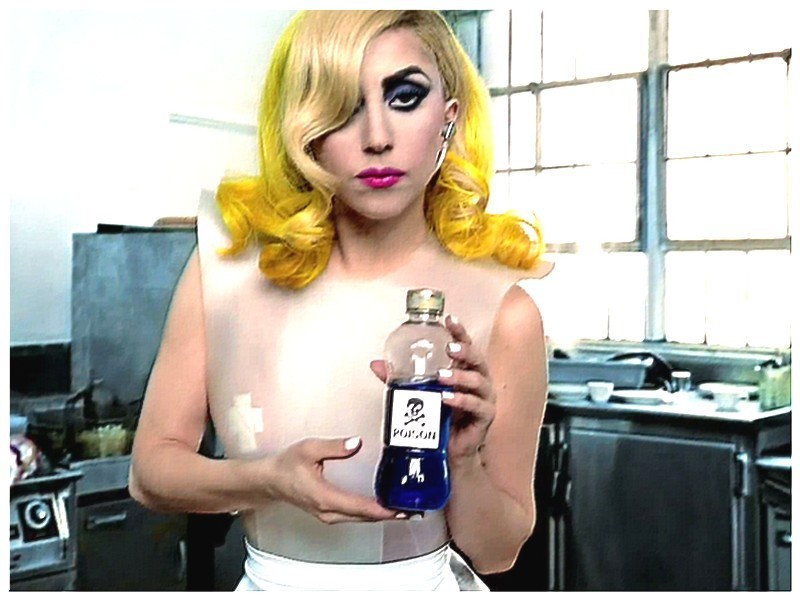

Lady Gaga ft Beyonce - Telephone


Tuesday, 1 October 2013

Branding (RESEARCH)

In most situations, branding is often heard when a company decides to put a label or sign on a particular product in order for the audience to easily acknowledge the item when seen. Similarly, the music industry tend to do the same with the artists. Ways they do this is by giving an artist a particular aspect that would be seen in cross media such as the album and magazine covers, music video and even trailers for the song. An example of this would be Beyoncé. As Beyoncé has always been successful for most of her career as a musician, we, as an audience, noticed there were no distinct aspects to her character. Although she was strongly acknowledge as a artist, she didn't have a distinct image like other artists like Michael Jackson. Here we can see the distinct image of the artist with the colour scheme consisting on white and black, the hat, shiny jacket and white shiny glove:
 
 
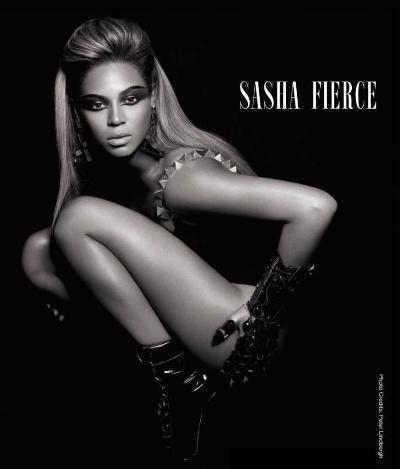
Going back to Beyoncé, she realised that she needed a way to brand herself across the media. So in the process of doing so, she decided to invent an alter ego called 'Sasha fierce'. This persona tends to be the opposite of Beyoncé's loving and down to earth mannerisms. Sasha is portrayed to have an attitude and have a violent look about her. From time to time Beyoncé will switch alter egos, this gives the audience a choice with which character they would want to like more and also boost the audience range . Here is the great Beyoncé, or Sasha fierce if you will, at work being branded across the media:
 
(Album cover)
 
(Magazine cover)
 
(Music video- 'Put a ring on it')
 
 
As we can see from the different media appearances of Beyoncé (Sasha fierce), the branding of this persona tends to consists on long slightly dark hair, heavily dark massacre around the eyes, revealing and dark outfits and noticeable grey scale effect. All these aspects are used to brand the artist, the grey scale effect and all dark clothing will give the audience an incorporated image that will make them become more distinct and recognisable. In addition, this idea of the alter ego branding for Beyoncé corresponds with the theory of Laura Mulvey discussing the ways artists represent themselves. In this case, Beyoncé deciding to oppose from her kind and innocent nature and spawn a character of darkness, aggression and bad behaviour- something that is not commonly seen with Beyoncé. She represented herself as being a rebellious and outrageous character.


Function of a music video.

The main functions of a music video is to promote the single, the album the single is from and the artist themselves. Also the audience expect the music video to be entertaining as well as visual satisfaction. To do this, a music video has to:

  • Sell the song in a way the audience can remember the song from the music video.
  • The audience need to be given a good understanding of the song so they engage with it visually, this is often done through a performance or a story telling.
  • Entertain the viewer by highlighting the talents of the artist-dancing, singing, performing and physical appearance.
A music video is a marketing aspect in which it helps to sell the artist, their brand and products to the artists targeted audience.

Lady Gaga's song 'Telephone' is a good image of this:


  • The video is like a short film as much as a pop video.
  • Lady Gaga wears little clothing, and dresses inappropriately which contrasts with what prisoners usually wear.
  • All-women Prisons are not usually like that which illustrates her style as she likes to dress differently one example of this is the crime scene tape wrapped round her and the cigarette glasses. This indicates the love she has for fashion and style as she likes to outline that in most of her videos.
  • She is also seen as being very controversial due to the fact that she is very intimate with another woman.
  • Lady Gaga also stares directly into the camera which tells us that she is taking control and wants to dominate the video. 


Laura Mulveys theory.

Laura Mulvey quotes ' In a world ordered by sexual imbalance, pleasure in looking has been split between active/male and passive/female. The determining male gaze projects its fantasy onto the female figure which is styled accordingly.'

Women represent themselves in a way in which they can attract the male audience. Laura believes that women should present themselves in a provocative way to grab the attention of men, this is known as the 'Male gaze'. Often women are used in music videos as objects rather than them being the centre of attention, this is to make them look attractive and to grab the attention of the targeted audience (mainly male audience). Male artists use females in their music videos to an advantage as women make them look good, not only this women are highly sexually stylised to make the video look desirable. However this is not always the case some female artists in the RnB genre like to present themselves in a more sensible, suited way an example of this is Adele. These female artists like to be dressed in a suitable, appropriate way as they want to be presented as a strong, independent woman and want to gain respect. In my opinion Laura Mulvey's opinion is still very much relevant in society as women want to appeal to a certain audience, this is by presenting themselves in a highly sexually stylised way.

Below is an example of a music video which supports Laura's theory:

Functions of a music video

There are various funtions for a music video, some musicians use music videos as a form of artistic/creative expression, other use a music video to add layers to the song, some use music videos to force the audience to think about issues, the majority however use music videos as a form of promotion/advertisement for an album or just for the artist themselves, as a way of getting their name out in the public. This is why you will see the artist/s/bands, taking a prominent role within the video. Examples:

Kanye West - Runaway (Artistic/Creative)
  • Shortented form of a 35 minute film
  • Many stereotypical artistic things in terms of props, costume etc
Jay-Z, Kanye West ft Frank Ocean - No Chruch In The Wild (Add layers)
  • Doesn't contradict the lyrics, but adds layers to them and gives a visual representation of what the artists meant
  • Artists aren't seen within the video
 
 
Micheal Jackson - Man in the Mirror (Thought provoking)
  • Numerous world issues
  • Subtle link with the lyrics
  •  
 
Action Bronson - Strictly for my Jeeps (Promotion)
  • Self promotion
  • No real link with the lyrics
  • Artist very prominent within the video
 

Moodboard